The Complete HACCP Compliance Checklist
Everything you need to build, maintain, and audit your HACCP food safety management system. Used by 400+ UK food businesses to stay inspection-ready year round.
50-Point Compliance Checklist
Covers every HACCP requirement across 7 critical areas
Temperature Log Templates
Ready-to-use fridge, freezer, cooking, and delivery logs
Cleaning Schedule Templates
Daily, weekly, and monthly cleaning checklists
Your HACCP Compliance Checklist
Work through each section to ensure your food safety management system meets UK regulatory requirements
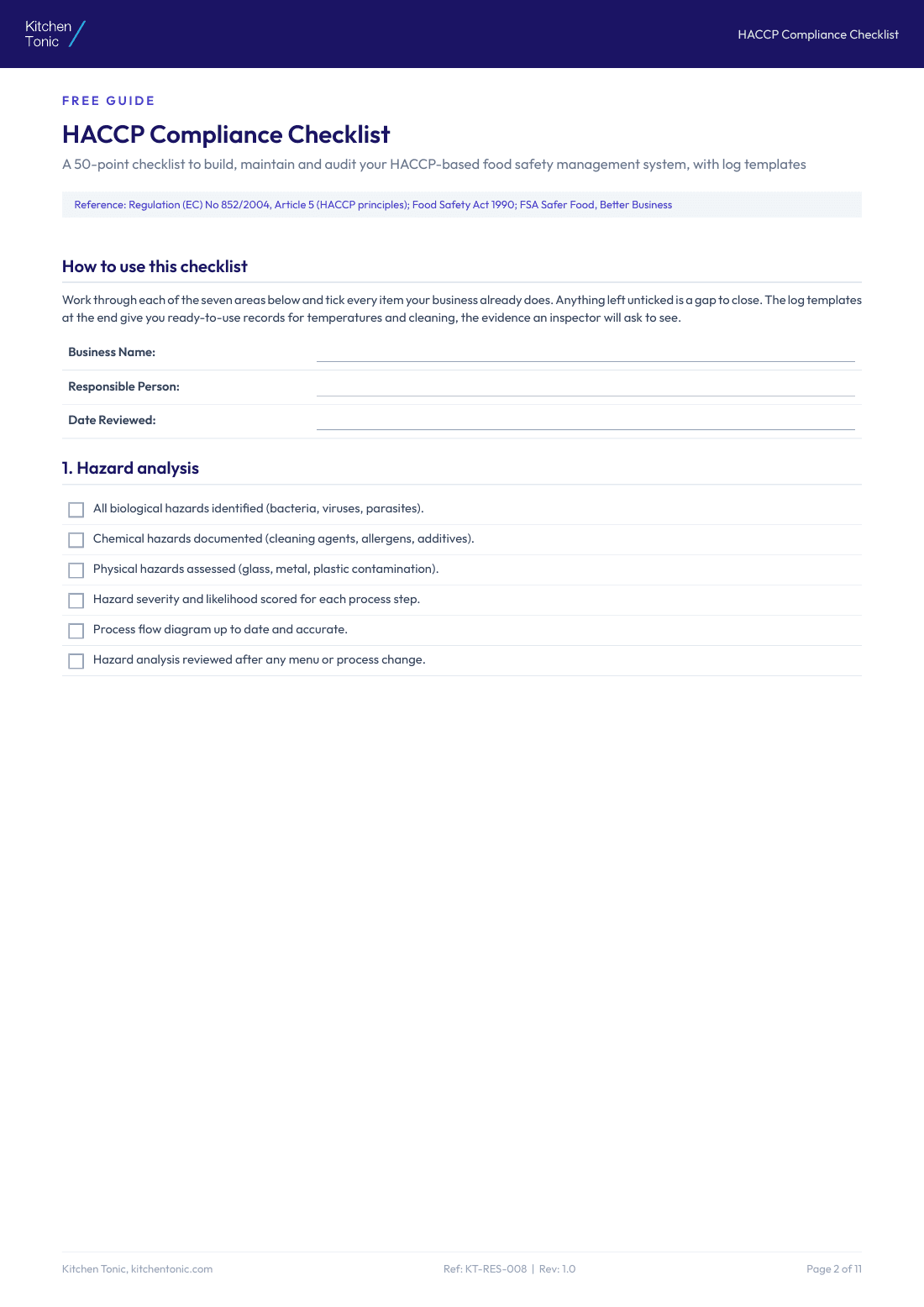
Hazard Analysis
6 items
- All biological hazards identified (bacteria, viruses, parasites)
- Chemical hazards documented (cleaning agents, allergens, additives)
- Physical hazards assessed (glass, metal, plastic contamination)
- Hazard severity and likelihood scored for each process step
- Process flow diagram up to date and accurate
- Hazard analysis reviewed after any menu or process change
Critical Control Points (CCPs)
6 items
- All CCPs identified using decision tree methodology
- Critical limits set for each CCP (time, temperature, pH)
- Monitoring procedures documented for every CCP
- Corrective actions defined for when limits are breached
- CCP monitoring records completed and signed daily
- Verification procedures scheduled and documented
Temperature Control & Monitoring
8 items
- Fridge temperatures checked and logged twice daily (0–5°C)
- Freezer temperatures recorded daily (below −18°C)
- Cooking core temperatures verified (75°C minimum)
- Hot holding temperatures maintained above 63°C
- Cooling records show food cooled to 8°C within 90 minutes
- Delivery temperatures checked and recorded on arrival
- Thermometer calibration schedule in place
- Probe thermometers cleaned between uses
Cleaning & Sanitation
8 items
- Master cleaning schedule covers all areas and equipment
- Cleaning records completed daily and signed off
- Correct dilution rates documented for all chemicals
- COSHH data sheets available for every cleaning product
- Deep cleaning schedule in place (weekly/monthly tasks)
- Equipment dismantled for cleaning where required
- Cleaning materials stored separately from food
- Disposable cloths or colour-coded reusable cloths in use
Cross-Contamination Prevention
8 items
- Separate chopping boards for raw and ready-to-eat foods
- Colour-coded equipment system implemented
- Raw and cooked foods stored separately (raw below cooked)
- Separate preparation areas or time-separation procedures
- Handwashing procedures displayed and followed
- Allergen cross-contact controls in place
- Staff changing facilities and protective clothing provided
- Effective pest control programme with contractor records
Supplier & Traceability
6 items
- Approved supplier list maintained and reviewed annually
- Supplier food safety certificates/audits on file
- Delivery checks documented (temperature, condition, dates)
- Full traceability, one step back, one step forward
- Product recall procedure documented and tested
- Use-by and best-before dates monitored with stock rotation
Documentation & Record Keeping
8 items
- HACCP plan documented and signed by responsible person
- All records retained for minimum 12 months
- Staff training records up to date with certificates
- Internal audit schedule in place (at least quarterly)
- Management review of HACCP system at least annually
- Non-conformance and corrective action log maintained
- HACCP team members identified with defined responsibilities
- Document control system prevents use of outdated records
Unlock all 11 pages
Get the free PDF by emailA look inside this 11-page PDF, emailed to you free
Get the printable checklist and log templates
We will email your download link for this 50-point checklist, plus ready-to-use temperature and cleaning log templates. No spam, unsubscribe anytime.
Let a consultant write your HACCP plan
Site-specific HACCP plans from £500, EHO-ready and built around your menu. Or book a free call to talk it through first.
Prefer to prep yourself first? Grab the free EHO inspection checklist.