Food safety, built for the school day
From nursery snack times and primary canteens to secondary school kitchens and university catering, we help schools and nurseries deliver safe meals every day, with training and systems designed around term-time realities, multi-site operations, and the particular duty of care you owe your pupils.
Last updated:

How we can help

School-specific HACCP plans
We write HACCP plans that reflect how school meal production actually works, from primary canteen cook-serve lines to secondary buffets and packed lunch policies. Plans scale to support multi-academy trusts and local-authority catering contracts, with clear accountability at every step.

Training built around term time
Level 2 and Level 3 food hygiene qualifications scheduled to fit school calendars, not to interrupt them. Available for kitchen staff, lunchtime supervisors, and catering managers across primary, secondary, and SEN settings, with direct experience delivering in education environments.
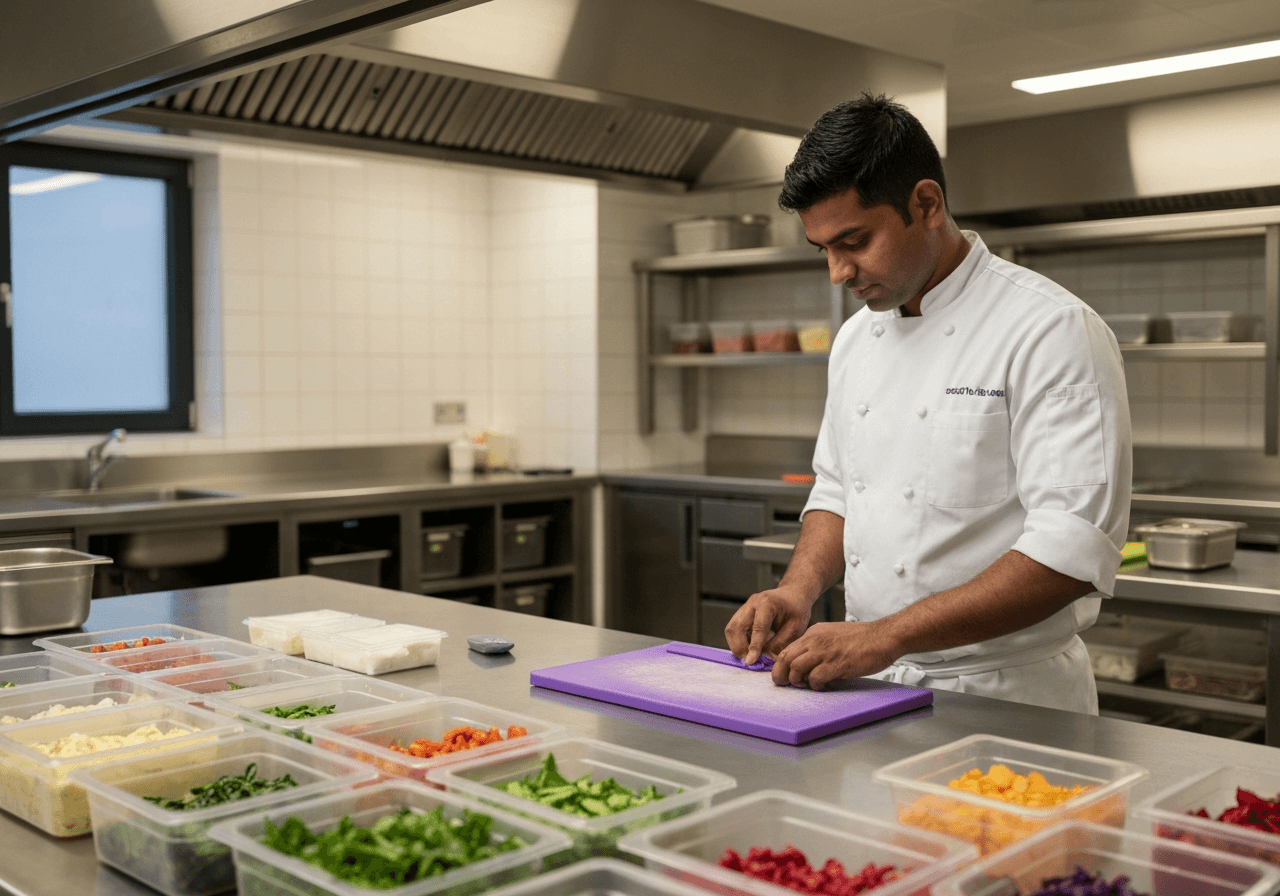
Allergen safeguarding
We build allergen management systems that integrate with pupil welfare records and give front-of-house staff the confidence to handle allergen queries safely. Includes full compliance with Natasha's Law (PPDS labelling) for packed lunches and grab-and-go food. Every system is documented so it holds up under scrutiny.

EHO and Ofsted readiness
School kitchens face two inspectorates: Environmental Health Officers assess food safety compliance, and Ofsted's safeguarding framework extends to the food environment. We prepare your kitchen and policies to satisfy both, with mock EHO inspections, documented procedures, and corrective-action plans that close gaps before an unannounced visit.
Food safety built around the school day
School and nursery kitchens serve a young, often captive population on a tight timetable, with allergens that must be managed dish by dish. Food safety has to stay reliable under volume and speed, and clear enough that catering and supervisory staff work from the same information.
We build HACCP plans sized for school catering, allergen systems that link to individual pupil records, and accredited training for kitchen and lunchtime staff. Our HACCP consulting and allergen management keep mealtimes safe from kitchen to classroom.
What your school food safety covers
- Hazard analysis for high-volume service windows
- Allergen management linked to individual pupil records
- Controls for cook-serve and cook-chill production
- Special diet and free-from procedures
- Temperature monitoring procedures and records
- Staff training and competency records
- EHO inspection readiness
Guide prices
- Site-specific HACCP plan
- from £500
- Mock EHO inspection
- from £350
- Accredited food safety training
- from £200

Reviewed by a food safety expert
Carren Amoli
Founder & Lead Food Safety Consultant
BSc (Hons) · Former NHS dietitian · International food safety auditor · 16+ years
Carren founded Kitchen Tonic in 2009 and has 16+ years in food safety. She personally oversees client work, from HACCP plans to EHO inspection support, and has helped 500+ UK kitchens reach a Food Hygiene Rating of 5.
More about Carren and the teamOne place to manage training across your sites and team
The KitchenTonic Business Portal lets you set mandatory courses by site and role, track every certificate across your whole business, and access bulk-rate accredited training, free to join, no contract.
Free to join
Create an account in under two minutes, no card required, no contract on the Free tier.
Employee training tracker
Invite your team, assign accredited courses, and track progress and certificates across every site.
Site-specific mandatory courses
Set the training each site and job role requires, from zero-hours staff to supervisors, so nothing slips.
Business pricing
Bulk seat discounts up to 20%, plus 10–25% off consulting when you purchase 2+ courses.
School food safety: your questions answered
Can training be scheduled around term time?
Yes. We schedule Level 2 and Level 3 food hygiene training to fit the school calendar, typically during inset days, half-term or quieter periods, so catering and supervisory staff can complete accredited qualifications without disrupting service. For multi-academy trusts we can co-ordinate cohorts across several sites on a single plan.
Do school and nursery kitchens legally need a HACCP plan?
Yes. Under assimilated Regulation (EC) 852/2004, almost every food business must put in place and maintain a permanent procedure based on HACCP principles. For a school this means a written, working plan that reflects how your kitchen actually operates, from cook-serve canteen lines to packed lunches and grab-and-go. The documentation should be proportionate to your setting, but it must be in place and kept current.
How do you handle allergen management for children?
Children may not always recognise or communicate an allergy, so the system has to be robust without relying on the pupil. We build allergen management that links kitchen production to pupil welfare records, with safe systems to prevent cross-contamination and clear procedures for service staff. Where food is pre-packed for direct sale, such as packed lunches and grab-and-go, Natasha's Law (PPDS labelling) also applies, and we make sure your labelling meets it.
How do EHO and Ofsted inspections relate to the school kitchen?
An Environmental Health Officer from the local authority inspects food hygiene and awards a Food Hygiene Rating, while Ofsted's safeguarding framework extends to the welfare of pupils, including the food environment. The two look for different things, but both expect documented procedures and safe daily practice. We prepare kitchens and policies for both with mock EHO inspections and corrective-action plans that close gaps before an unannounced visit.
Connect with our schools team
Tell us about your school, trust, or catering operation and we will outline the support that fits your term-time schedule and compliance needs. We will come back within one business day.
Enquiring about: Schools & Nurseries
How can we help?
Pick the option that best describes your situation.
Faster route: take the 4-minute risk assessment
Most businesses get a faster, tailored answer when they share their FSA rating, business type, and pain points first. We’ll email a personalised scorecard and a consultant matched to your postcode.
Type of enquiry